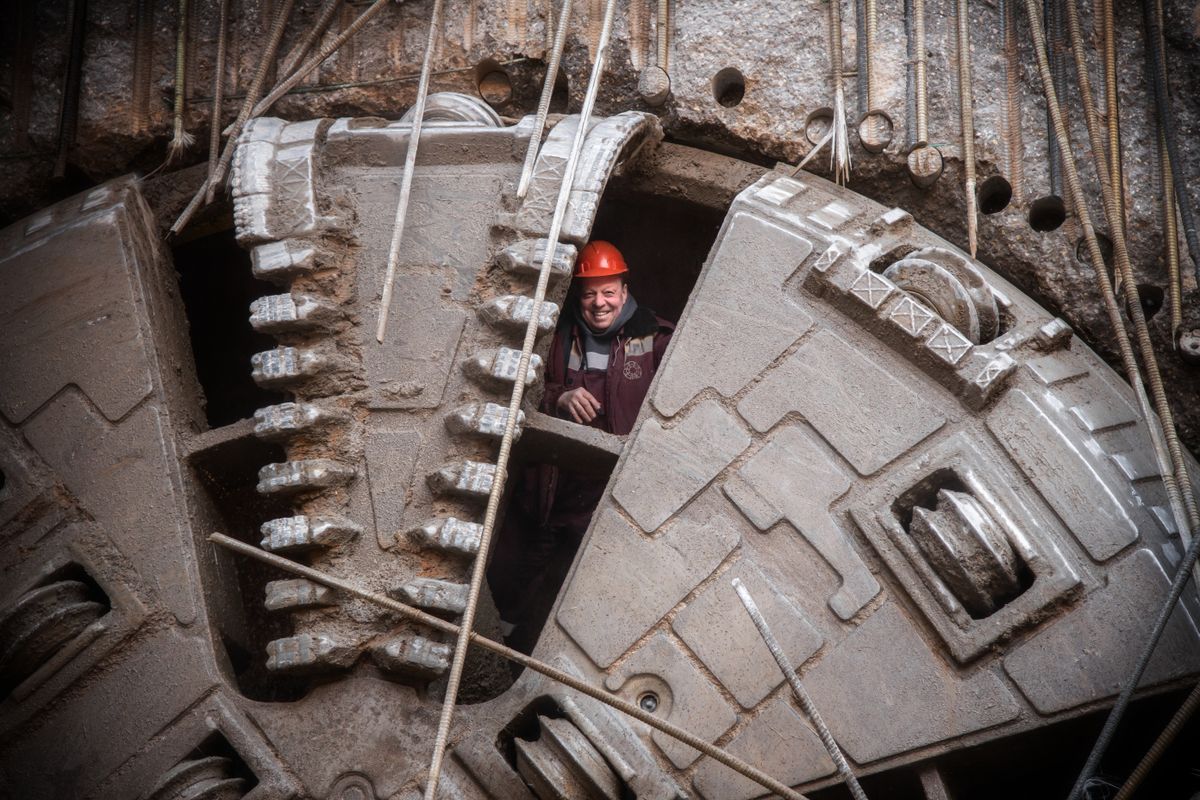
Tunnelling is one of the most specialised environments in UK construction. The hazards underground are different in kind, not just degree: the atmosphere itself can become dangerous, escape routes are limited, and the ground you are working through is both the structure and the threat. The Tunnelling Safety Training Scheme, or TSTS, exists to make sure everyone who goes underground understands that environment before they set foot in it.
This guide explains what the TSTS course covers, the standards and regulations behind it, and how to prepare for the assessment with confidence.
What Is the TSTS and Who Needs It?
TSTS is the recognised safety training scheme for people working in tunnelling and underground construction in the UK. It forms part of the CITB Site Safety Plus suite, whose scheme standards are published by CITB, and it is widely required by principal contractors on tunnelling projects for anyone who will work below ground, from miners and TBM crews to fitters, electricians, surveyors and engineers who visit the face.
The course does not attempt to make you a tunnelling specialist in a day. Its purpose is narrower and more important: to ensure that everyone underground recognises the specific hazards of the environment, understands the controls that protect them, and knows exactly what to do when something goes wrong.
BS 6164: The Backbone of Tunnelling Safety
Just as temporary works management is built around BS 5975, tunnelling safety in the UK is built around BS 6164, the code of practice for health and safety in tunnelling in the construction industry. The current edition, BS 6164:2019, brings together good practice for the whole life of a tunnelling project, covering ground investigation and risk assessment, atmosphere and ventilation, fire and emergency arrangements, transport and plant underground, occupational health, and the management arrangements that tie it all together.
BS 6164 also underlines the importance of competence and training for underground workers, which is precisely where schemes like TSTS fit in. You will not be examined on clause numbers, but the assessment reflects the standard's priorities, so understanding its main themes gives your revision a reliable structure.
The Core Underground Hazards
Ground Stability and Support
The defining hazard of tunnelling is the ground itself. Unsupported ground can collapse suddenly and without much warning, which is why excavation and support sequences are engineered, specified and enforced. Shaft linings, tunnel support systems and other enabling structures are temporary works in their own right, managed under the same disciplines of design, checking and permitted loading that apply above ground. If those controls are unfamiliar, our explainer on temporary works supervisor and coordinator roles shows how the system works. For the TSTS assessment, the key behaviours are respecting exclusion zones, never advancing beyond the supported face, and reporting any change in ground conditions, water ingress or damage to support immediately.
Atmosphere and Gas Monitoring
Underground, you cannot take the air for granted. Oxygen can be deficient or enriched, and gases such as methane, hydrogen sulphide, carbon monoxide and carbon dioxide can accumulate from the ground, from plant or from the works themselves. Some are toxic, some flammable, some both, and none can be reliably detected by smell alone. Tunnels are therefore ventilated mechanically and the atmosphere is monitored, with fixed and portable gas detectors, alarm levels and clear response actions. Candidates should understand why monitoring is continuous rather than occasional, why alarms must never be ignored or silenced, and why smoking and other ignition sources are so strictly controlled underground.
Fire and Limited Egress
Fire is more dangerous underground than almost anywhere else because smoke fills confined galleries quickly and there may be only one way out. Controls therefore concentrate on prevention: managing flammable materials, controlling hot work with permits, maintaining plant to prevent ignition, and keeping escape routes clear. Every underground worker must know the evacuation arrangements, the location of self-rescuer sets and refuge points where provided, and the communication and tally systems that tell those on the surface exactly who is below ground at any moment.
Plant, Transport and People
Tunnels concentrate heavy plant, locomotives, conveyors and people into narrow spaces with poor sightlines. Segregation of pedestrians and vehicles, designated walkways, communication protocols, lighting and high-visibility clothing all take on heightened importance, and the assessment expects you to recognise safe behaviours around moving plant in confined galleries.
Confined Spaces and the Law
Much of the tunnelling environment engages the Confined Spaces Regulations 1997, which apply wherever there is a reasonably foreseeable specified risk such as a dangerous atmosphere, fire, or free-flowing solids and liquids. The regulations establish a simple hierarchy that TSTS candidates must know: avoid entry to a confined space where reasonably practicable; where entry is necessary, work to a safe system of work, typically controlled by a permit; and never enter without adequate emergency arrangements already in place. That last point is tested regularly, and it reflects hard experience: would-be rescuers acting on instinct, without equipment or a plan, have too often become casualties themselves. Guidance on confined space working is available from the Health and Safety Executive.
Working in Compressed Air
Some tunnelling operations use compressed air to hold back water and support the face, and TBM interventions may require workers to enter pressurised chambers. This work is governed by the Work in Compressed Air Regulations 1996 and brings its own set of controls: medical assessment of fitness, controlled compression and decompression procedures, restrictions on exposure, and awareness of decompression illness and its symptoms. Most candidates will never work in compressed air, but the TSTS expects awareness that it is a distinct, tightly regulated activity that only trained and medically cleared personnel may undertake.
Occupational Health Underground
Not every tunnelling hazard is sudden. Respirable crystalline silica from excavated ground and concrete processes can cause irreversible lung disease, so dust suppression, extraction, respiratory protective equipment and health surveillance are standard controls under the Control of Substances Hazardous to Health Regulations. Noise from plant in enclosed spaces, hand-arm vibration from tools, manual handling and heat all feature in the syllabus. The theme to carry into the assessment is that health risks accumulate silently, which is why exposure controls and health surveillance are legal requirements rather than optional extras.
How to Prepare for the TSTS Assessment
The TSTS assessment, like other Site Safety Plus tests, favours applied understanding over recall. Questions typically present an underground scenario, a gas alarm sounding, smoke observed near a conveyor, a change in ground conditions at the face, and ask for the correct first action. The reliable pattern is to protect people first, raise the alarm through the established system, follow the emergency arrangements you were inducted in, and never improvise a rescue.
Structured practice makes that pattern second nature. Working through realistic CITB-style mock tests before your course shows you how questions are phrased and where your knowledge is thin, and repeating them afterwards confirms you are ready for the real assessment. Focus your revision on the reasoning behind each answer, and give extra attention to atmosphere monitoring, confined space entry rules and emergency procedures, because these underpin more questions than any other topics.
Final Thoughts
Tunnelling rewards discipline. The industry has learned, sometimes at great cost, that underground environments punish improvisation and forgive almost nothing, which is why BS 6164, the Confined Spaces Regulations and schemes like TSTS exist. Book the TSTS course, ground your revision in the hazards and controls covered above, and use mock tests to turn understanding into quick, confident answers. Prepared that way, the assessment is simply a check on knowledge you will rely on every working day below ground.
Put this guide into practice
Test yourself with free practice questions that mirror the real exam format — or book the real course when you're ready.